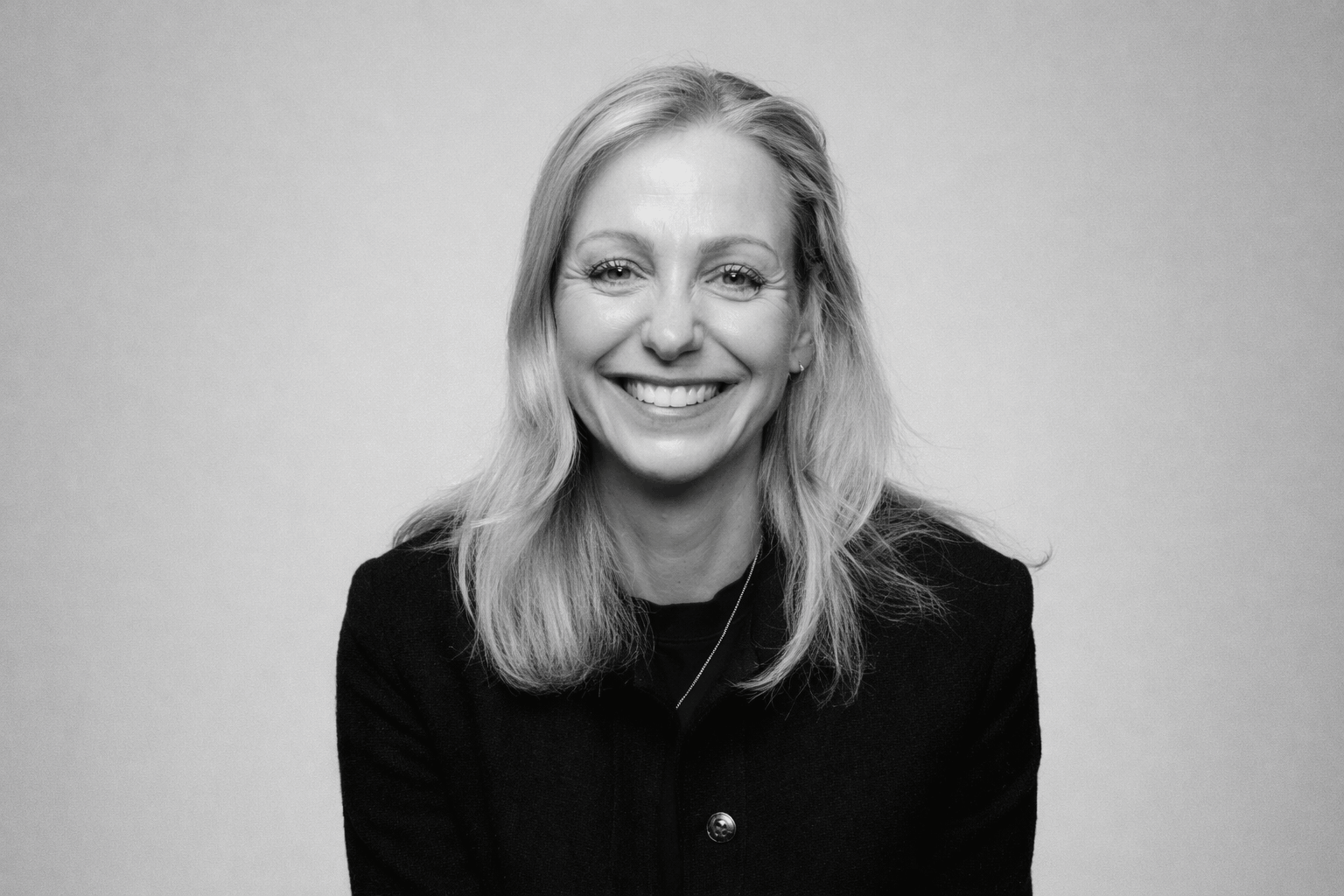
Claire Hollands (BSc Geography, 2004) CEO of Saatchi and Saatchi UK returned to campus last year to deliver the annual Birmingham Business School Advisory Board guest lecture on the impacts of technology and media consumption on GenZ. We sat down to ask her about her career and insights from the lecture.
How do you feel that the skills and experience you developed at university equipped you for your career?
My job is all about people. I was a big part of the Geography Council and that meant running an organisation alongside my degree. My role in council taught me leadership, entrepreneurial and people skills that in many ways were more valuable than the academic side of a degree and certainly endured into my career today.
What has your career journey been since graduating?
I originally started studying medicine at Birmingham. I thought: ‘Right, that's my life planned out.’ But then when I got to medical school I realised it wasn’t for me and I made the big decision to change my degree and do something I loved: geography. I always had a creative side so when I found an industry that combined business and creativity I knew it was for me. I feel very lucky because my career path was very squiggly and not really planned but 20 years later I’m still doing something I love.
How has technology and media consumption changed throughout your career and how has it affected your work?
It's been transformational, in truth, like it has in so many industries. When I first joined my industry, it was the era of Blackberries and more traditional formats like TV, radio and print were heavily used. But then technology changed the whole media landscape in an exciting way.
I think there's been many wonderful things in the development of technology that have created more canvases for us to be creative and tell stories in. Often that is short form and there is a skill in telling stories in short form.
I was at a Google talk recently and the presenter was saying the pace of technology is getting faster by the day. It means, today is the slowest that you will live in the environment that you're in. And I thought: ‘Wow, I've never really looked at it like that.’ But I think the truth of that is that really what everybody has to do is just be open to exploration and new ideas and going and playing with the new technology out there.
Considering this ever-evolving media landscape, what do you anticipate will be your biggest professional challenge in the next 10 years?
I think it's how you continue to evolve and lead. As a leader in any industry, you can’t stand still - but I think particularly in the creative world, it's about how you continue to test, learn and experiment and embrace the change and the technology. At the same time, we've got to upskill a whole generation of talent and it's not like you do it once and it's done; it is a continuous process and you need to be bringing your whole workforce through that journey with you. I'm very embracing of all the tech and data but I do believe that ideas still need to have that humanity to them. As I’ve already said: we are a people business.
So on to the topic of your talk, how is media consumption shaping Gen Z and what worries you?
In my lecture I talked about three cultural beats (Netflix’s Adolescence, Channel 4’s Swiped and Careless People). A lot of my job is being quite close to culture and understanding what's going on in society and then shining a light on things.
What was interesting about the seminar is a lot of the students afterwards reached out to me saying they just hadn't really noticed their own behaviours. There are some shocking and scary statistics about how much time Gen Z spend on their phone. I have a five-year-old and a seven-year-old and they are the first generation that has never lived without a digital world. Gen Z are the test bed for my children and this lack of awareness really worries me.
The social media side of it has just got out of control and my point in the lecture was: there's not a silver bullet as to how you solve it. I think it's going to take accountability from everybody, from parents, from children, from schools, from government, from the platforms, and from brands to try and drive that change.
How can we make Gen Z's media consumption a bit healthier? And do you think that as a society we should ban certain platforms?
I think the first job is making that generation more aware of their behaviours. I think they are sleepwalking through without even really realising the number of hours that they're spending on their phone or how it's making them feel or questioning the content that they're seeing. There are lots of great groups like ‘Smartphone Free Childhood’ which has got a lot of momentum. We should be getting behind some of these activist groups and give them more momentum.
I feel mixed about banning social media. There's a part of me that goes: absolutely yes. But then there's a part of me that goes: the reality is so many kids will find hacks around a ban and actually it starts to remove the accountability from the platforms because it doesn't change the content that's on those platforms, and that accountability is what we need to work towards. If I had to decide I probably would ban social media below a certain age group, but it doesn't solve all the problems; it's not a job done.
What role do you think universities have to support those that are advocating for accountability and change in media consumption?
For the universities I think it’s about creating more forums for people to come together and talk about it. Perhaps spaces like lecture halls or certain university buildings could follow school protocols asking students to place their phones in special locked pouches where it effectively goes dead until unlocked. I also think it is about having a voice. As a prestigious university with so many students, Birmingham has potential to be a significant voice and I think it's how you use that to deliver the right impact and effect.
How can we continue to foster a cohesive university community when our students are being so polarised online?
That’s a difficult one to answer. I think it comes back to the awareness piece about this generation. It's making sure social media is not the only way they're consuming media and trying to create an environment where they get access to lots of different inputs to have a wider perspective on society and world affairs. I grew up doing live debates; having two sides of a story and building up an informed point of view is a real skill. It would be interesting to see how we can develop those perspectives among new generations of digital consumers.