Recent dinosaur discoveries by Birmingham researchers have attracted worldwide media attention. Professors Richard Butler and Kirsty Edgar talk about some of the major finds and what they might mean for the future.
‘We’re in a golden era for dinosaur discovery,’ says Richard Butler, Professor of Palaeobiology and one of the Birmingham researchers who has been keeping those discoveries in the news since joining the University as a Birmingham Fellow in 2013.
Richard highlights that 2025 saw a new species identified at the rate of almost one a week, continuing an acceleration seen over the last 20 years.
Those discoveries extend beyond recognising new species to finding new clues about how dinosaurs lived and oved. Richard names two recent finds as the most significant in his time at the University.
Highway lights
First, excavations at Dewars Farm quarry near Bicester in Oxfordshire uncovered a series of trackways featuring hundreds of different dinosaur footprints from the Middle Jurassic Period (around 166 million years ago).
In 2024 the discovery dubbed the “dinosaur highway” – the largest track site to have been found in the UK – was the focus of an episode of the BBC Two series episode of the BBC Two series Digging for Britain, presented by Professor Alice Roberts, Birmingham’s Professor of Public Engagement in Science.
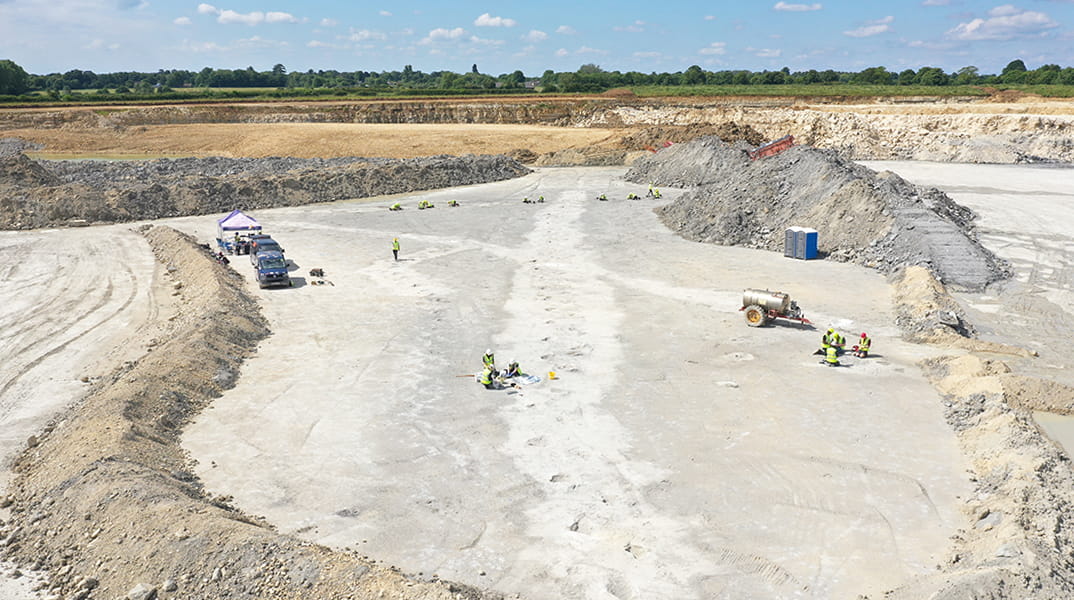
The dinosaur highway dig at Dewars Farm
Picture credit: University of Birmingham
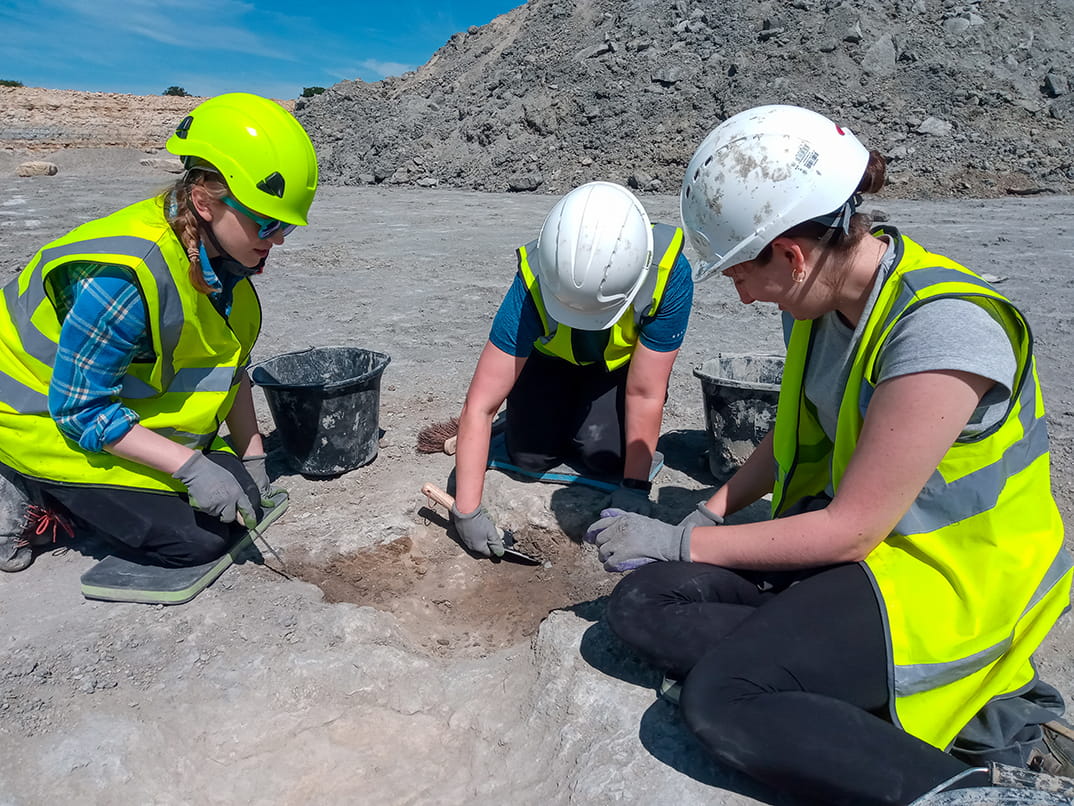
Students reveal a footprint on site
Picture credit: Dr Caroline Wood, University of Oxford
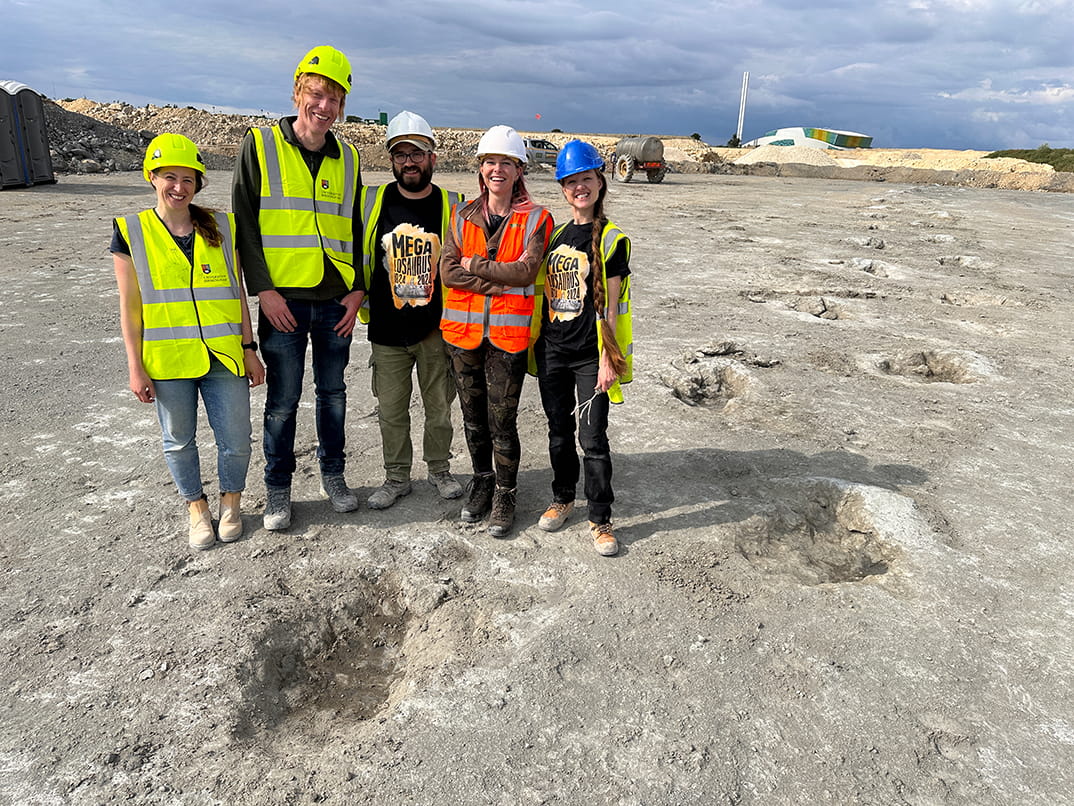
An extraordinary window into the lives of dinosaurs
(left to right): Professors Kirsty Edgar and Richard Butler, Dr Duncan Murdock of Oxford University Museum of Natural History (OUMNH), Professor Alice Roberts, and Dr Emma Nicholls of OUMNH.
In 2025, teams from the Universities of Oxford, Birmingham and Liverpool John Moores and Oxford University Museum of Natural History (OUMNH) returned to a new location at the quarry and uncovered 200 more footprints, including a 220-metre-long trackway that is Europe’s longest from a sauropod dinosaur.
Kirsty Edgar, Professor in Micropalaeontology and one of the excavation leads, says: ‘These footprints offer an extraordinary window into the lives of dinosaurs, revealing details about their size, the speed of their movements, interactions and the tropical environment they inhabited.’
Most of the trackways were made by long-necked herbivores known as Cetiosaurus, which could reach up to 18 metres long, while other, much rarer trackways come from the carnivore Megalosaurus, the very first dinosaur to be scientifically named and described in 1824.
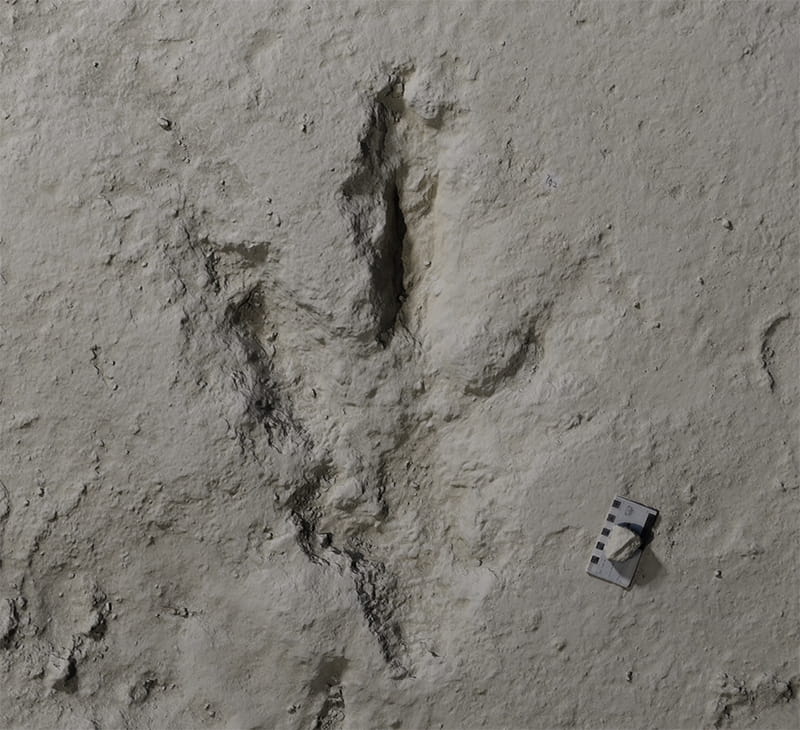 The fact the trackways exist at all tells us a lot about the ecosystem of Mid-Jurassic North Oxfordshire. As Kirsty explains: ‘The ground on which dinosaurs were walking would have needed certain conditions for those footprints to be preserved so well.
‘You need a bit of water to soften the ground they’re walking over and to enable a footprint to be made. You also need the sediment making up the surface to be quite fine so that a shape and details of the foot are preserved.
‘It also needs to be a setting where those tracks will then be preserved rather than eroded by wind or other animal footprints. The sediments the footprints are in, and the other fossils that we find at the site, suggest they were made on the edge of marine lagoons.’
A most unusual dinosaur
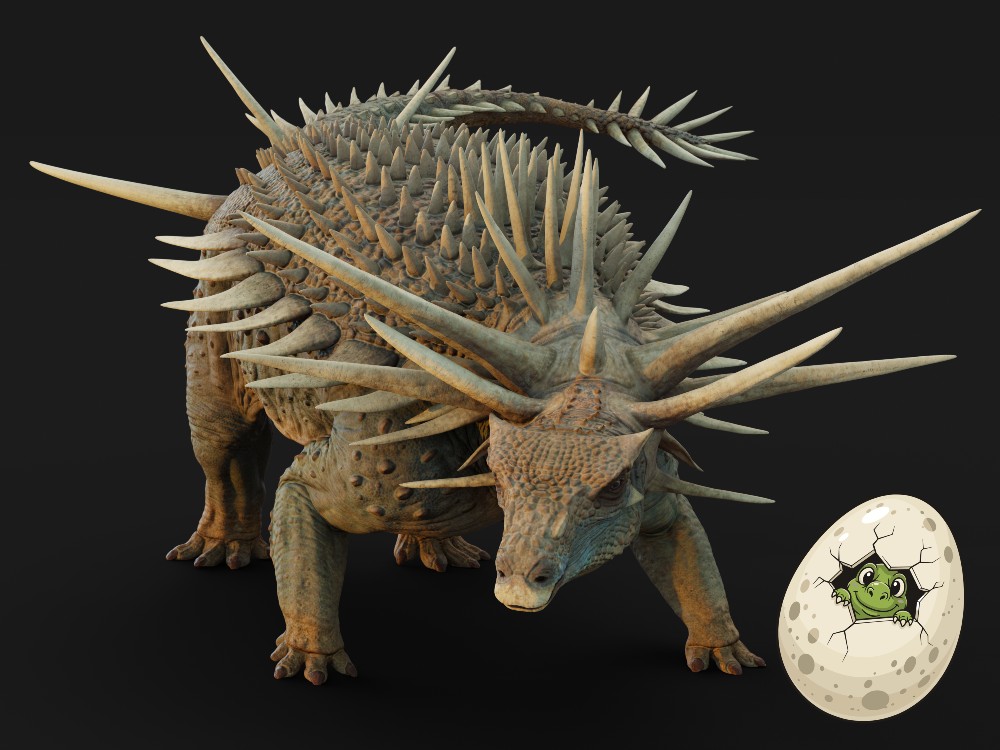 Richard was also the co-author of a major piece of research outlining the latest findings about Spicomellus afer – an ankylosaur, heralded as one of the most unusual dinosaurs ever found.
The fossils were unearthed in Morocco in 2022-23 and the team’s analysis published in the journal Nature last year. The findings suggest that Spicomellus had a unique bone structure, with bony spikes fused onto and projecting from all of its ribs, and most bizarrely of all, long spikes almost a metre long emerging from a collar on its neck.
He says: ‘Seeing the Spicomellus remains was spine-tingling. We just couldn’t believe how weird it was and how unlike any other dinosaur, or indeed any other animal we know of, alive or extinct.
‘Imagining the purpose of that collar is fascinating. The sheer size of the spikes goes beyond what you think would be necessary for defence, so we have hypothesised that it might have been for display like a peacock, either to attract a mate or dissuade rivals.
‘While our findings give us a much more thorough picture of Spicomellus, there is still much to be learned. We don’t have a skull yet, or enough fossils to distinguish between males and females. That would be the magic next step.’
The Birmingham benefit
These and other discoveries have kept Birmingham firmly in the limelight, which is fitting given that Geology is a subject that has been taught at the University since its founding. Charles Lapworth was the first Professor of Geology at Mason College, the forerunner of the University, and his name lives on with the Lapworth Museum of Geology.
‘A number of very significant palaeontologists have studied and worked at Birmingham,’ says Richard. ‘We’re probably the joint-largest group of university academics in the subject in the UK, doing a lot of exciting research across a whole range of different areas.’
And that research has tangible benefits for students, as Kirsty adds: ‘The dinosaur highway has been really important in raising the profile of palaeontology at Birmingham. It’s a unique site, the largest dinosaur trackway ever discovered in the UK, and its location means that we can give our students a once-in-a-lifetime opportunity to work on a dig of this importance and scale and be part of new discoveries.’
The rights and wrongs of fossil hunting
While dinosaur discoveries often make for exciting headlines, the issue of what happens next does not receive such extensive coverage.
The worldwide fascination with dinosaurs means that a huge industry exists in the illegal trafficking of fossils, at a commercial scale.
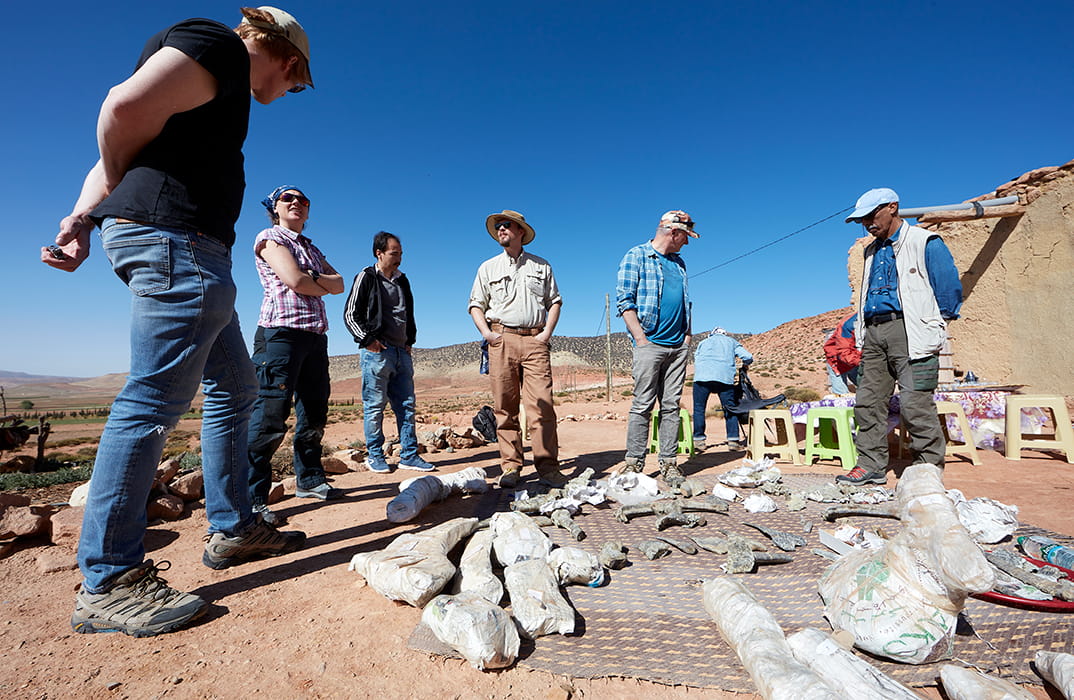
This is particularly true in Morocco, the home of the Spicomellus fossil, as Richard explains: ‘You should have a permit to export fossils out of Morocco, but they are hard to get.
 Picture: The Trustees of the Natural History Museum, London
‘Most fossils are being illegally exported and are stripping that natural heritage out of the country. There’s huge money in the legal trade of dinosaur fossils. Auctions take place at the biggest houses in the world – the record fee is around $45m for a skeleton.
‘When researchers leave a site, local smugglers come in and effectively strip mine that area of every fossil they can find.’
Richard is working to support collaborators in Morocco who aim to establish a geopark in those sites of particular interest to researchers. Geoparks are recognised by UNESCO, providing a level of international protection and allowing the area to be developed for sustainable tourism, offering locals an alternative, ethical and legal income stream.